
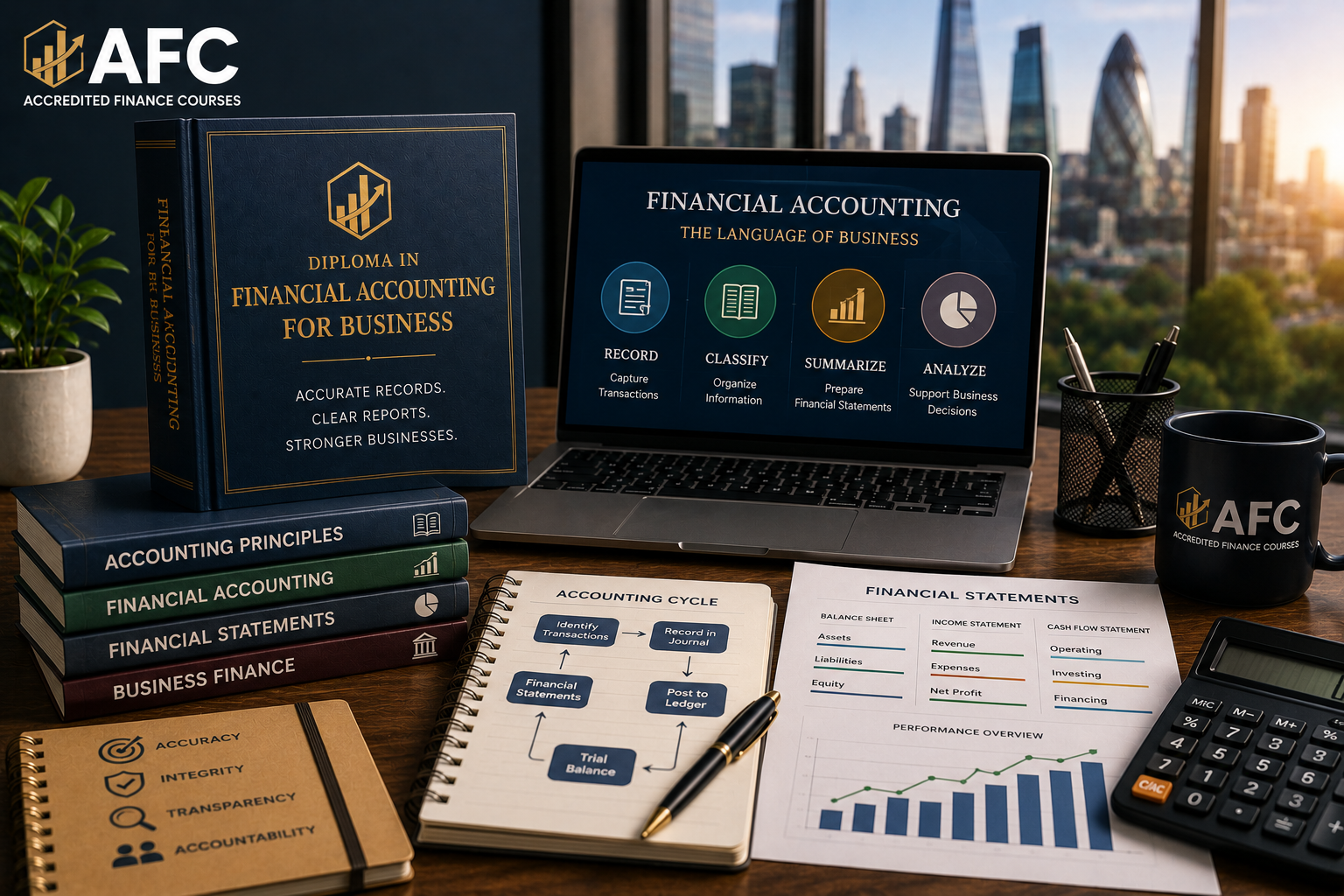
Financial information forms the foundation of every successful business. Whether an organisation is a small enterprise, a multinational corporation, or a public sector institution, informed decision-making depends upon accurate financial records and reliable accounting information. Financial accounting enables businesses to monitor performance, manage resources, comply with regulatory requirements, and communicate financial results to investors, lenders, and other stakeholders. As global business environments continue to evolve, professionals with strong accounting knowledge remain essential across every industry.
Modern organisations rely on accounting professionals to prepare financial statements, maintain accurate records, analyse financial performance, and support strategic planning. Beyond recording transactions, financial accounting provides valuable insight into profitability, cash flow, financial position, and operational efficiency. These insights help business leaders evaluate opportunities, manage risks, and make informed financial decisions that support long-term growth.
The growing importance of financial reporting has increased demand for professionals with expertise in Diploma in Financial Accounting for Business. This programme introduces learners to the principles of financial accounting, business accounting, bookkeeping, financial reporting, and accounting standards while helping them understand how accounting information supports effective business management.
Unlike programmes that focus exclusively on advanced accounting techniques, Diploma in Financial Accounting for Business builds a strong foundation by explaining how accounting systems operate, how financial information is prepared, and why accurate reporting is essential for businesses of every size. It develops practical knowledge that is relevant across accounting, finance, auditing, banking, taxation, and corporate management.
Knowledge of Diploma in Financial Accounting for Business benefits accounting graduates, finance professionals, business owners, entrepreneurs, managers, accountants, and anyone seeking to understand business finance. These skills remain valuable across public practice, private organisations, government institutions, charities, and multinational companies.
Selecting the right education provider is equally important for professional development. Accredited Finance Courses supports learners through industry-focused finance education that reflects modern accounting practices, financial reporting standards, business finance, and corporate accounting principles.
This comprehensive guide explains the purpose of Diploma in Financial Accounting for Business, the knowledge it develops, the practical skills required by employers, and why financial accounting continues to play a central role within modern organisations.
👉 Official course bundle: https://www.accreditedfinancecourses.co.uk/home/course/Diploma-in-Financial-Accounting-for-Business/55
What Is Diploma in Financial Accounting for Business?
Diploma in Financial Accounting for Business is a professional programme that introduces learners to the principles of financial accounting, financial reporting, bookkeeping, business accounting, and financial statement preparation. It explains how accounting information is collected, recorded, organised, and presented to support effective business decision-making and regulatory compliance.
Financial accounting focuses on producing reliable financial information for internal and external stakeholders. This information enables investors, lenders, regulators, business owners, and managers to evaluate organisational performance and financial health.
A comprehensive accounting course UK generally introduces learners to:
Financial accounting
Business accounting
Accounting principles
Financial reporting
Bookkeeping
Financial statements
Accounting standards
Business finance
Together, these subjects provide a strong foundation for understanding modern accounting systems and financial reporting practices.
Why Financial Accounting Is Essential for Every Business
Every organisation depends upon accurate financial information to operate efficiently and make informed business decisions.
Without effective accounting systems, businesses would struggle to monitor profitability, control expenditure, manage cash flow, or comply with legal and regulatory obligations.
Several important functions explain why financial accounting remains fundamental to business success.
Reliable financial information enables business owners and managers to evaluate financial performance, identify opportunities for improvement, and make informed strategic decisions.
Accurate accounting data supports planning, budgeting, investment decisions, and operational management.
Maintaining Financial Records
One of the primary objectives of business accounting is maintaining complete and accurate financial records.
These records provide the information required for financial reporting, taxation, auditing, and long-term business planning.
Regulatory Compliance
Businesses must comply with accounting standards, taxation requirements, and financial reporting obligations.
Proper accounting systems help organisations meet these responsibilities while maintaining transparency and accountability.
Improving Financial Performance
Financial reports provide valuable insight into revenue, expenditure, profitability, assets, liabilities, and cash flow.
Understanding this information enables organisations to improve operational efficiency and financial performance.
Why Professionals Choose Diploma in Financial Accounting for Business
Demand for accounting professionals continues to grow across businesses of every size.
Professionals choose Diploma in Financial Accounting for Business because it develops practical knowledge that supports accounting, finance, auditing, and business management careers.
Common reasons include:
Understanding accounting principles.
Strengthening financial reporting knowledge.
Developing bookkeeping skills.
Learning business accounting.
Improving financial analysis.
Supporting career progression.
Building professional credibility.
Preparing for advanced accounting qualifications.
A recognised finance certification UK also demonstrates commitment to continuous professional development while strengthening employment opportunities.
Who Should Study Diploma in Financial Accounting for Business?
One of the strengths of Diploma in Financial Accounting for Business is its relevance across numerous industries and professional roles.
Whether you are beginning your accounting career or expanding existing knowledge, accounting skills remain valuable throughout the business world.
Graduates in accounting, finance, economics, and business management often pursue specialist accounting education to strengthen practical knowledge before entering professional roles.
Business Owners and Entrepreneurs
Business owners benefit from understanding financial accounting because it improves financial decision-making, budgeting, cash flow management, and business performance monitoring.
Finance Professionals
Professionals working within finance departments develop stronger knowledge of financial reporting, bookkeeping, and accounting standards through this programme.
Managers and Business Leaders
Managers responsible for budgets, operational performance, and strategic planning benefit from understanding financial reports and accounting information.
This knowledge supports more effective business decisions.
Individuals Seeking Accounting Careers
Learners interested in accounting careers gain practical understanding of accounting systems, financial reporting, and bookkeeping while preparing for future professional opportunities.
Essential Skills You Develop Through Diploma in Financial Accounting for Business
Developing expertise in Diploma in Financial Accounting for Business provides professionals with practical accounting knowledge that supports accurate financial reporting, informed business decision-making, and regulatory compliance. These skills are valuable across accounting firms, corporate finance departments, banking, public sector organisations, and businesses of every size.
One of the most important skills developed is the ability to understand and prepare financial statements. Learners explore how the balance sheet, income statement, and cash flow statement present an organisation's financial position, operating performance, and cash movements. These reports help stakeholders assess profitability, liquidity, and long-term financial stability.
Bookkeeping and Record Keeping
Effective bookkeeping forms the foundation of financial accounting. Professionals learn how financial transactions are recorded accurately, organised systematically, and maintained in accordance with accounting principles. Reliable bookkeeping supports accurate reporting, auditing, and business planning.
H3: Financial Reporting
Understanding financial reporting enables professionals to communicate financial information clearly to management, investors, lenders, regulators, and other stakeholders. Accurate reporting improves transparency while supporting informed business decisions.
Business Accounting Knowledge
Strong business accounting skills help professionals monitor revenue, expenses, assets, liabilities, and profitability. This knowledge supports budgeting, financial control, and effective resource management across different types of organisations.
Professionals develop the ability to interpret accounting information, evaluate financial performance, identify trends, and support strategic planning through informed financial analysis.
Why Choosing the Right Learning Provider Matters
Professional accounting education delivers the greatest value when it reflects current accounting standards and practical business requirements.
Before selecting an accounting course UK, learners should consider:
Industry-relevant curriculum
Experienced accounting professionals
Practical learning outcomes
Current accounting standards
Flexible study options
Career-focused education
Learner support
Continuous professional development
Choosing a provider that regularly updates learning materials helps professionals remain aligned with modern accounting practices.
Why Accredited Finance Courses Is the Preferred Provider
Choosing the right education provider is an important investment in long-term career success.
Accredited Finance Courses delivers industry-focused finance education designed to reflect modern financial accounting, business reporting, bookkeeping, and accounting principles.
Accounting standards, financial reporting requirements, and business practices continue to evolve.
Accredited Finance Courses develops programmes that help learners strengthen practical accounting knowledge while remaining aligned with current industry expectations.
Flexible Professional Development
Flexible learning enables professionals to continue developing accounting expertise while balancing employment and personal commitments.
Programmes delivered by Accredited Finance Courses support careers across accounting, auditing, banking, corporate finance, taxation, and business management by combining theoretical knowledge with practical accounting skills.
Diploma in Financial Accounting for Business Course Review
Diploma in Financial Accounting for Business provides a comprehensive introduction to accounting principles, financial reporting, bookkeeping, and business finance. Rather than concentrating solely on technical accounting procedures, the programme explains how accounting information supports organisational performance, financial control, and informed business decision-making.
Key strengths include:
Strong financial accounting knowledge
Practical bookkeeping skills
Financial reporting principles
Accounting standards awareness
Business accounting understanding
Financial statement analysis
Broad business relevance
Strong foundation for future accounting qualifications
This balanced approach makes the qualification valuable for learners seeking practical accounting knowledge applicable across multiple industries.
Why Financial Accounting Is the Foundation of Every Successful Business
Every successful organisation depends on reliable financial information to make informed decisions, maintain regulatory compliance, and achieve sustainable growth. Regardless of whether a business is a start-up, a growing enterprise, or a multinational corporation, financial accounting provides the structured information needed to understand financial performance and support long-term planning. This is why Diploma in Financial Accounting for Business remains highly relevant for professionals seeking to build strong accounting and finance knowledge.
Accurate accounting records enable organisations to prepare essential financial statements, including the balance sheet, income statement, and cash flow statement. These reports provide valuable insight into profitability, liquidity, operational efficiency, and overall financial health. Business owners, investors, lenders, and management teams rely on this information to evaluate performance, identify opportunities, and make strategic decisions with confidence.
In addition to supporting internal decision-making, financial reporting plays a vital role in maintaining transparency with external stakeholders. Investors use financial reports to assess investment opportunities, lenders review financial performance before approving finance, and regulatory authorities require businesses to maintain accurate records and comply with recognised accounting standards. Strong accounting practices therefore enhance business credibility and improve stakeholder confidence.
A comprehensive understanding of business accounting also helps organisations manage budgets, control expenditure, monitor revenue, and improve financial planning. By analysing accounting data, businesses can identify trends, measure profitability, evaluate costs, and allocate resources more efficiently. This contributes to stronger financial management and better long-term business performance.
For professionals, developing expertise in accounting creates opportunities across numerous industries. Knowledge gained through Diploma in Financial Accounting for Business supports careers in financial accounting, auditing, bookkeeping, taxation, corporate finance, banking, and business consultancy. It also provides a valuable foundation for individuals who wish to pursue advanced accounting qualifications or leadership roles within finance departments.
As financial regulations and business environments continue to evolve, maintaining accurate financial records and understanding accounting principles remain essential professional skills. Through industry-focused education, Accredited Finance Courses helps learners strengthen their knowledge of financial accounting, business accounting, financial reporting, and accounting principles while preparing them to contribute confidently to modern organisations and the wider financial services industry.
What You Will Learn During Diploma in Financial Accounting for Business
Although programme content may vary between providers, learners generally develop knowledge across several important accounting areas.
Understanding the fundamental concepts that govern financial accounting and business reporting.
Financial Statements
Learning how to prepare and interpret the balance sheet, income statement, and cash flow statement.
Bookkeeping Systems
Developing practical knowledge of recording, classifying, and maintaining financial transactions.
Financial Reporting
Understanding how organisations communicate financial information accurately and consistently.
Business Finance
Exploring how accounting information supports budgeting, financial planning, profitability analysis, and strategic decision-making.
Accounting Compliance
Understanding the importance of maintaining accurate financial records while following recognised accounting principles and reporting requirements.
Career Opportunities After Completing Diploma in Financial Accounting for Business
Professionals with accounting expertise remain in demand across almost every sector of the economy.
Career opportunities include:
Preparing financial statements, maintaining accounting records, and supporting financial reporting activities.
Accounts Assistant
Supporting accounting teams with bookkeeping, reconciliations, and day-to-day financial administration.
Finance Officer
Managing budgets, preparing reports, monitoring expenditure, and supporting organisational financial management.
Bookkeeper
Recording financial transactions, maintaining accounting systems, and preparing financial information for businesses.
Management Accounting Assistant
Supporting budgeting, financial analysis, cost reporting, and internal decision-making processes.
Business Finance Administrator
Providing financial administration, reporting support, and accounting assistance across commercial organisations.
These opportunities exist across accounting firms, multinational corporations, banks, government departments, charities, educational institutions, healthcare organisations, and private businesses.
Conclusion
Accurate financial information is essential for every successful organisation. Strong accounting systems support informed decision-making, regulatory compliance, financial transparency, and long-term business growth. Understanding accounting principles enables professionals to interpret financial information confidently while contributing to effective organisational management.
Diploma in Financial Accounting for Business provides a comprehensive understanding of financial accounting, business accounting, financial reporting, bookkeeping, financial statements, accounting principles, and management accounting. These competencies help professionals build practical accounting expertise that remains valuable across a wide range of industries.
Whether you are beginning an accounting career, studying an accounting course UK, or expanding your understanding of business finance, continuous professional learning remains essential in today's evolving financial environment.
Through industry-focused finance education, Accredited Finance Courses helps learners strengthen practical accounting knowledge, improve analytical skills, and prepare for rewarding careers across accounting, finance, corporate reporting, and business management.


0 comments