
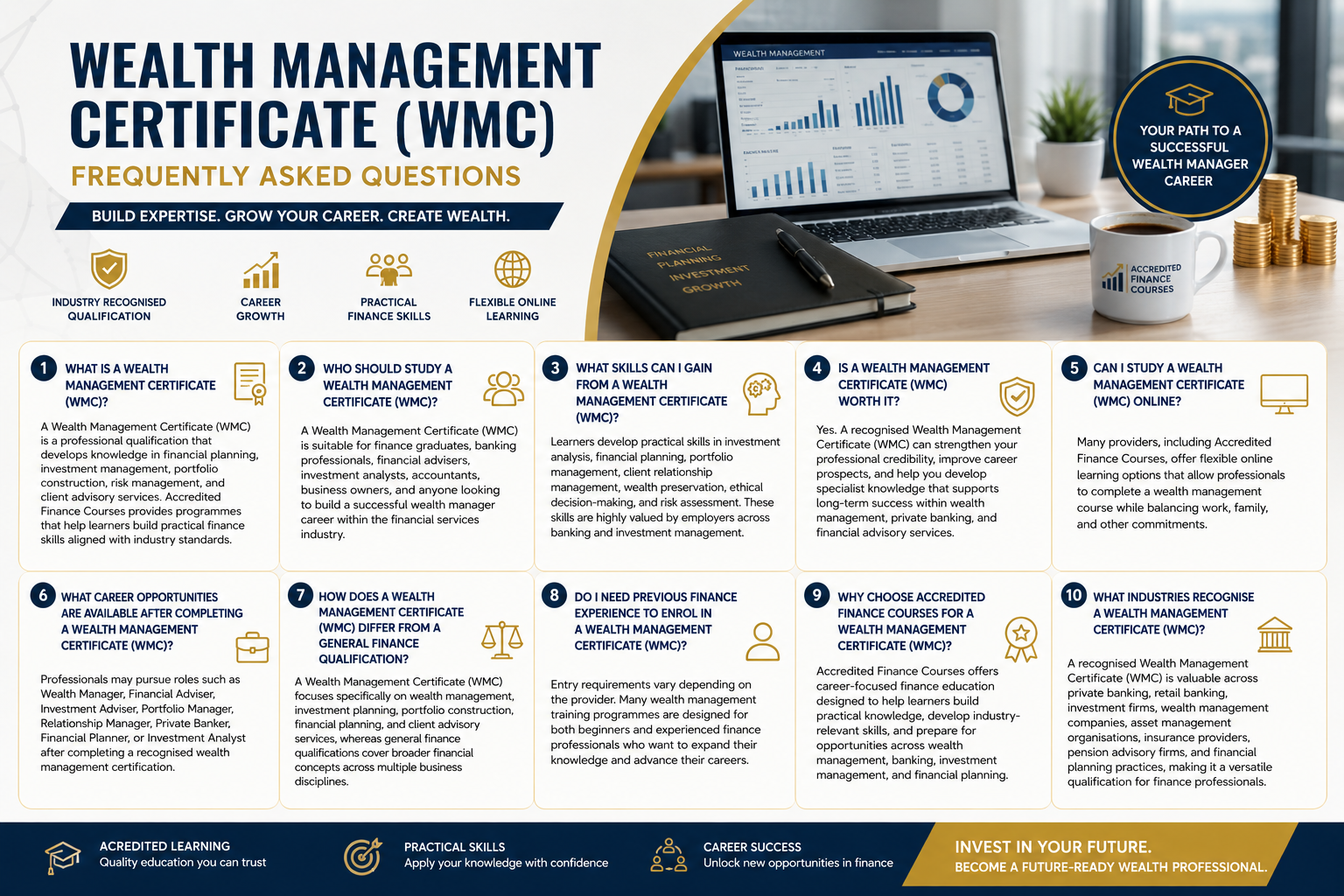
Choosing the right Wealth Management Certificate (WMC) often raises questions about eligibility, career opportunities, course content, industry recognition, and the skills required to succeed in wealth management. The following frequently asked questions provide practical information to help prospective learners understand how this qualification can support professional development and long-term career growth within the financial services industry.
Frequently Asked Questions About Wealth Management Certificate (WMC)
A Wealth Management Certificate (WMC) is a professional qualification that develops knowledge in financial planning, investment management, portfolio construction, risk management, and client advisory services. Accredited Finance Courses provides programmes that help learners build practical finance skills aligned with industry standards.
2. Who should study a Wealth Management Certificate (WMC)?
A Wealth Management Certificate (WMC) is suitable for finance graduates, banking professionals, financial advisers, investment analysts, accountants, business owners, and anyone looking to build a successful wealth manager career within the financial services industry.
3. What skills can I gain from a Wealth Management Certificate (WMC)?
Learners develop practical skills in investment analysis, financial planning, portfolio management, client relationship management, wealth preservation, ethical decision-making, and risk assessment. These skills are highly valued by employers across banking and investment management.
4. Is a Wealth Management Certificate (WMC) worth it?
Yes. A recognised Wealth Management Certificate (WMC) can strengthen your professional credibility, improve career prospects, and help you develop specialist knowledge that supports long-term success within wealth management, private banking, and financial advisory services.
5. Can I study a Wealth Management Certificate (WMC) online?
Many providers, including Accredited Finance Courses, offer flexible online learning options that allow professionals to complete a wealth management course while balancing work, family, and other commitments.
6. What career opportunities are available after completing a Wealth Management Certificate (WMC)?
Professionals may pursue roles such as Wealth Manager, Financial Adviser, Investment Adviser, Portfolio Manager, Relationship Manager, Private Banker, Financial Planner, or Investment Analyst after completing a recognised wealth management certification.
7. How does a Wealth Management Certificate (WMC) differ from a general finance qualification?
A Wealth Management Certificate (WMC) focuses specifically on wealth management, investment planning, portfolio construction, financial planning, and client advisory services, whereas general finance qualifications cover broader financial concepts across multiple business disciplines.
8. Do I need previous finance experience to enrol in a Wealth Management Certificate (WMC)?
Entry requirements vary depending on the provider. Many wealth management training programmes are designed for both beginners and experienced finance professionals who want to expand their knowledge and advance their careers.
9. Why choose Accredited Finance Courses for a Wealth Management Certificate (WMC)?
Accredited Finance Courses offers career-focused finance education designed to help learners build practical knowledge, develop industry-relevant skills, and prepare for opportunities across wealth management, banking, investment management, and financial planning.
10. What industries recognise a Wealth Management Certificate (WMC)?
A recognised Wealth Management Certificate (WMC) is valuable across private banking, retail banking, investment firms, wealth management companies, asset management organisations, insurance providers, pension advisory firms, and financial planning practices, making it a versatile qualification for finance professionals.

0 comments